BUSES, MIDI BUSES AND MINI BUSES ONLY
Where:
At the beginning of any road or a specific section of a road, especially on routes designed to prioritize public transport or in areas with high commuter traffic.
Purpose:
To indicate that the road or portion of the road is reserved exclusively for buses, midibuses, and minibuses.
This helps improve the efficiency of public transport by providing dedicated lanes or routes, reducing congestion, and ensuring the safe movement of these vehicles.
It also enhances passenger safety and facilitates smoother boarding and alighting at designated stops.
Action:
Only the driver of a bus, midibus, or minibus may use this road or designated section of the road.
All other vehicles are prohibited from entering or traveling on this portion.
Unauthorized use may result in fines, penalties, or other enforcement measures to ensure safety and compliance.

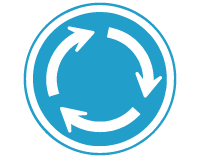
ROUNDABOUT
Where:
On any road where multiple roads intersect, typically at junctions designed to facilitate continuous traffic flow without the need for traffic signals.
Roundabouts are commonly used in urban and suburban areas to manage traffic safely and efficiently.
Purpose:
To indicate that drivers must move in a clockwise direction around the junction.
Roundabouts help reduce vehicle speed, minimize collision points compared to traditional intersections, and improve traffic flow by allowing vehicles to enter and exit at various points in a controlled manner.
Action:
Yield the right of way to vehicles already circulating within the roundabout, particularly those approaching from the right, if they are close enough to pose a danger or potential hazard.
Proceed clockwise around the roundabout only when it is safe to do so, ensuring that your entry does not disrupt the flow of traffic or endanger other road users.
Signal appropriately when exiting the roundabout to indicate your intended exit to other drivers.
Following these rules ensures smooth traffic movement and reduces the risk of collisions at multi-road intersections.